Funny _Happy Chat
- 4.6
- Rating
- 500.00K
- Installs
- Free
- Price

 Analysis by App-foxy
I approached Funny _Happy Chat as an entertainment app rather than a conventional messaging tool. Its main idea is to let me hold role-playing conversations with AI characters, then use those interactions as a light form of escapism. That distinction matters: I would not install it expecting a dependable way to contact friends, organize plans, or replace a serious assistant. I would install it when I wanted a playful conversation with a fictional personality that can respond immediately.
In my experience, the appeal comes from the freedom to choose a conversational mood. A short exchange can feel silly, dramatic, curious, or simply distracting after a long day. The app is free to download, which makes trying it straightforward, although optional purchases range from $1.99 to $49.99 per item. It is published by KY Technology Co., Ltd., belongs to the entertainment category, and carries a Teen content rating, so I would treat it as casual amusement for older teenagers and adults rather than a children’s chat space.
How the current experience feels in everyday use
I find that using Funny _Happy Chat on a shared household device calls for a little planning, even though the conversations are meant for entertainment. Before someone else picks up the device, I’d close or leave the chat and agree on whose turn it is; that simple routine helps keep one person’s role-play from becoming another person’s surprise. It also leads to a more useful question: what boundaries should each user set before starting?
You May Also Like

 Blood Strike: 2.5 Anniversary
Blood Strike’s Loadouts Turn Every Drop Into a Tactical Gamble
A close look at Blood Strike’s custom loadouts: how fast access to signature weapons reshapes its battle royale rhythm, rewards preparation, and narrows the gap between fights.

 Pandora - Music & Podcasts
Pandora’s Music Is Easy to Start, but Harder to Recover
Pandora’s strength is its low-effort path from a seed to a station. Its weak spot is how much confidence it asks you to place in connection, setup, and quiet recovery.

 8 Ball Pool
 Is Built on Rivalries, Rematches, and Routine
A close look at the rivalries, rematches, shared routines, and unanswered safety questions that turn a quick pool match into a persistent mobile community.

 Samsung Music
’s Quiet Strength Is Playing What You Already Own
Its reach comes less from spectacle than from dependable access to a personal library. That simplicity is both the app’s strongest retention engine and its ceiling.

 AccuWeather: Weather Radar
AccuWeather Review: A Quick, Clear Forecast for Everyday Decisions
For everyday plans, the best forecast is the one you can understand quickly. AccuWeather makes rain timing, radar, and local conditions easy to act on, with a few trade-offs.

 Hill Climb Racing
Why Hill Climb Racing Still Turns Crashes Into One More Run
A tiny car, a bumpy hill and one more upgrade: Hill Climb Racing keeps resurfacing because its simple chaos makes every near-miss feel personal.
More From Our News Desk



A simple idea that works best in short sessions
The strongest part of this app is its low-pressure format. I do not need to prepare a detailed prompt or understand a complicated interface before starting. I can enter a conversation, respond naturally, and see where the character takes the exchange. That makes it suitable for small gaps in the day: waiting for an appointment, taking a break from routine work, or looking for a few minutes of imaginative conversation before bed.
A realistic use case is an evening when I am tired of scrolling through short videos but do not want to commit to a full film or game. I can open the app, choose a character that matches my mood, and begin with a simple situation. Rather than treating every reply as a factual answer, I use the conversation as interactive entertainment. The value is closer to improvising with a fictional partner than to receiving reliable information.
That framing also helps avoid disappointment. AI characters can keep a scene moving, but they are not guaranteed to remain perfectly consistent. A character may forget part of the setup, misunderstand a subtle joke, or answer in a way that breaks the mood. I found that the best sessions are flexible ones, where I accept an unexpected reply and steer the conversation again instead of demanding a precise storyline.
Where the role-playing format has an advantage
Compared with ordinary entertainment apps, this format gives me more participation. A streaming service offers a finished story, while a social feed offers a stream of other people’s posts. Here, my replies influence the direction, even if the result is not fully predictable. That small amount of control is enough to make a familiar scenario feel more personal.
It also differs from a standard chatbot used for work or study. A productivity assistant is judged by accuracy, speed, and useful output. Funny _Happy Chat is better judged by tone, spontaneity, and whether the exchange remains enjoyable. If I ask it for a serious explanation, I would still verify the answer elsewhere. If I want a playful character interaction, the entertainment focus makes more sense.
One practical tip is to begin with a clear but not overly complicated premise. A short opening such as a setting, relationship, or mood gives the conversation direction without boxing it in. I get less satisfying results when I pack several unrelated requests into one message. The app is more enjoyable when I treat each exchange as a scene rather than as a command center for every possible task.
Who is likely to enjoy it
I think the app suits people who enjoy improvisation, fictional dialogue, and experimenting with conversational personalities. It can be particularly appealing to someone who wants a private creative outlet without having to write a complete story alone. A user can test a character idea, explore a “what if” situation, or simply have a humorous exchange when no friend is available to chat.
It may also work for writers who want to loosen up before drafting. I would not use the generated conversation as finished prose, but I could use an unexpected response to discover a conflict, a character reaction, or a different direction for a scene. The useful trick is to copy the idea mentally into a separate writing process rather than expecting the chat itself to become a polished manuscript.
On the other hand, I would skip it if my main goal is dependable companionship, private human conversation, or a structured mental-health service. The role-playing premise is entertaining, but it should not be confused with professional support or a real relationship. Users who dislike repetition, fictional responses, or unpredictable character behavior may find the novelty wears off quickly.
What the age rating means for my recommendation
The Teen rating is an important part of deciding whether this app belongs on a particular device. Role-playing chats can move into mature themes depending on the direction of a conversation, so I would not hand it to a young child simply because the download is free or the interface looks approachable. Parents and guardians should make their own decision about whether this kind of open-ended interaction fits the user’s age and boundaries.
I also recommend remembering that an AI character is not a human confidant. I would avoid entering sensitive personal details, private contact information, or anything I would not want repeated in an unpredictable conversational context. That is not a criticism unique to this app; it is a sensible habit whenever an entertainment product invites personal chat.
How the purchase model affects the experience
The free entry point is useful because I can decide whether the character-chat format suits me before spending anything. The purchase range, however, means I would pay attention to what an optional item actually unlocks before confirming it. A user who only wants occasional amusement may find the free experience sufficient, while someone who spends long periods in the app may be more tempted by paid extras.
My advice is to treat purchases as optional enhancements, not as part of the basic reason to install the app. Set a personal limit first, especially if the app becomes a daily habit. The price range is broad enough that “just trying one thing” can mean very different spending depending on the item. I would also avoid buying simply because a conversation has become emotionally engaging; the character’s responsiveness is part of the product experience, not evidence of a real personal bond.
Development, current version, and what existing users should expect
For me, the key expectation is that each person treats a character chat as their own fictional activity, not as a household messaging space or a reliable place to store personal thoughts. I’d avoid entering private family details and would check any optional purchase carefully before confirming it, especially if several people use the same device. With those boundaries in mind, it’s easier to decide how household members can coordinate without assuming the app provides shared-use controls.
A relatively young product with room to mature
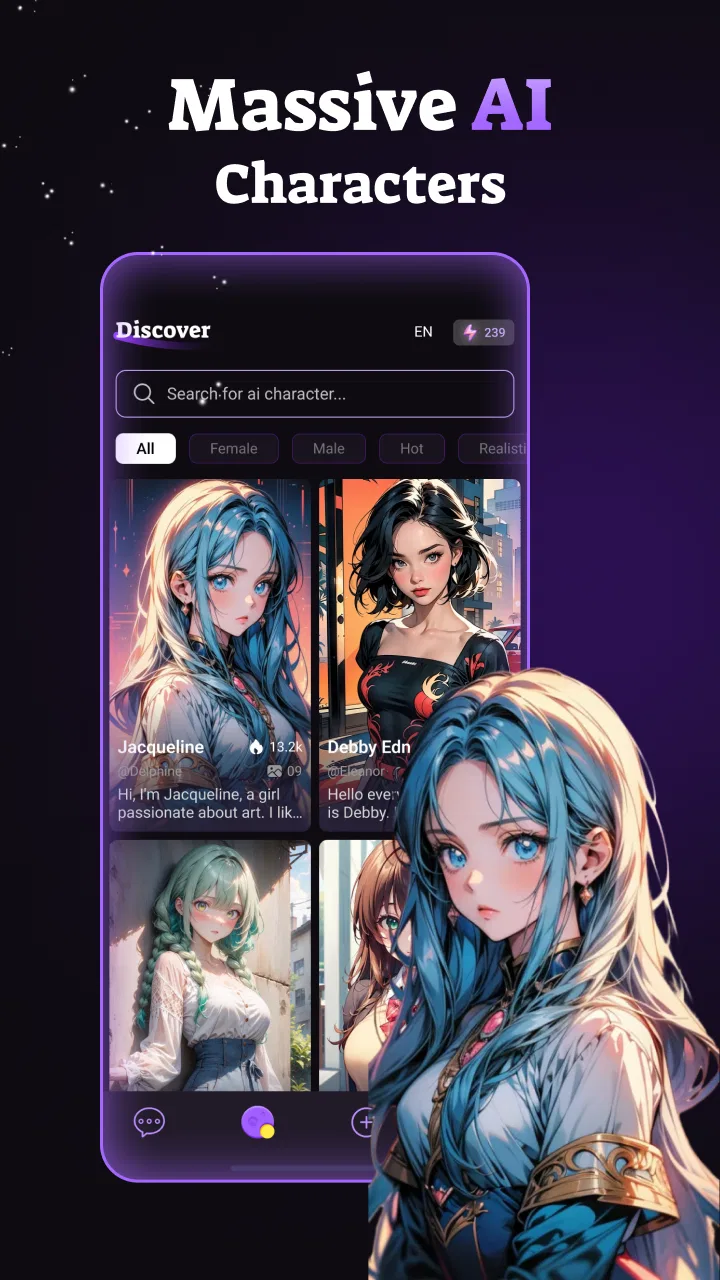
The app arrived on Jul 10, 2024, and its current version is 1.2.3. I read that as a sign of a product still establishing its identity rather than one with a long, settled history. The basic concept is already clear: entertainment through AI-character role-play and unlockable visual content, but the experience may continue to change as the developer refines the way characters, chats, and optional items work together.
For a new user, the current version is the practical reference point. I would install it with the expectation that the interface and conversation behavior may evolve. That is not automatically negative. Younger apps can feel fresh and focused, but they may also have rough edges that a mature messaging or entertainment platform has already solved.
Existing users should therefore separate confirmed present behavior from hopes about future updates. A new version number shows ongoing product development, but it does not promise a particular feature, redesign, or improvement. I would judge an update by whether conversations become easier to manage, characters feel more coherent, and the balance between free use and purchases remains comfortable.
What the audience response suggests
The app has an average rating of 4.6 from around 22 thousand ratings, with roughly 1.9 thousand written reviews. It has also passed 500 thousand installs. Those figures suggest that the concept is reaching a meaningful audience and that many users find the core idea enjoyable. They do not mean every conversation will work equally well, though. AI entertainment is highly personal: one user may love an unpredictable reply while another sees the same reply as a failure to stay in character.
I would use the positive reception as a reason to try the app, not as a guarantee that it will become a long-term favorite. The most useful question is whether I enjoy the process of guiding a fictional conversation. If I need a tightly scripted story, a traditional interactive-fiction title may be a better fit. If I want to influence a dialogue without knowing exactly where it will go, this app has a more suitable personality.
Small habits that improve the conversations
One non-obvious strength of this format is that I can shape the quality of a session through pacing. Sending one clear thought at a time gives the character a better chance to respond to the scene instead of forcing several emotional turns into one message. When a reply goes off track, I get better results by restating the immediate situation than by arguing with the character about what it “should” remember.
I also find it useful to decide what kind of session I want before opening the app. A ten-minute comic exchange, a fictional interview, and a longer dramatic scene require different expectations. Without that decision, it is easy to keep tapping through replies without enjoying the interaction. With a simple goal, I can stop when the scene has reached a natural point rather than treating endless chat as the objective.
Another practical trade-off concerns imagination. The app can supply momentum when I have no starting idea, but relying on it for every creative decision may make the experience feel repetitive. I get more from it when I bring a premise of my own, even a very small one. The AI then becomes a responsive partner instead of the sole source of entertainment.
Where the current experience still falls short
The biggest limitation is the uncertain boundary between role-play and reliable conversation. A convincing tone can make a reply sound authoritative even when the app is simply continuing a fictional exchange. I would never use it as my only source for medical, legal, financial, or other important information. That limitation is central to the product, not a minor technical detail.
Continuity is another likely friction point. Long-running stories are more demanding than short scenes because they depend on remembered details, stable relationships, and consistent motivations. If I wanted a carefully plotted narrative with dependable continuity, I would choose a dedicated story game or write the scenes myself. This app is more comfortable with flexible, episodic play.
The purchase structure can also affect immersion. When optional unlocks become part of the rhythm of using the app, the conversation may feel less like an open creative space and more like a product with gated extras. I would be comfortable with that only if I understood exactly what I was paying for and still enjoyed the free experience on its own.
How it compares with familiar alternatives
Against a normal messaging app, this is obviously less useful for maintaining real relationships, but it offers immediate availability and fictional variety. Against a streaming platform, it is less polished as a finished narrative but more interactive. Against a general AI assistant, it is more playful and character-focused, yet less appropriate for dependable research or practical tasks.
A social network remains the better choice when I want real reactions, shared context, and genuine human connection. A story-driven game is better when I want authored pacing, clear objectives, and a world designed to stay consistent. A general assistant is better when I need a concise explanation or help completing a task. I choose this app when the priority is conversational play and I am willing to accept some unpredictability in exchange for participation.
What I would watch in future updates
Because the app is at version 1.2.3, I would watch for improvements in conversation continuity, clearer handling of character identity, and smoother movement between short chats and longer role-playing sessions. Those areas would have the greatest effect on whether the app remains a quick novelty or becomes a dependable entertainment habit.
I would also pay attention to how the developer handles optional visual unlocks. The store summary highlights unique images, so the relationship between chat activity and visual content is important to the overall value. A good evolution would make the purpose of each purchase easy to understand and keep the free starting experience worthwhile. I would be cautious about assuming that any future change is automatically better until I had tried it myself.
For current users, the best approach is to enjoy what the app already does while keeping expectations realistic. Save especially good ideas outside the conversation if they matter to you, because an AI chat is not the same as a carefully maintained personal archive. If a favorite character starts behaving differently after an update, reassess the experience rather than assuming the older style will return.
My recommendation
I recommend Funny _Happy Chat to readers who want lightweight, fictional AI conversations and understand that the entertainment comes from improvisation rather than certainty. Its free starting point, Teen rating, and focused role-playing concept make it easy to explore, while the positive audience response suggests that the basic idea connects with many users. I especially see its value in short breaks, creative warm-ups, and playful scenarios that would be difficult to stage alone.
I would not recommend it as a replacement for friends, a source of trustworthy advice, or a fully authored game. The app is at its best when I keep the stakes low, avoid sharing sensitive information, and treat each character as a creative prompt with a voice. I would also decide in advance whether optional purchases fit my budget instead of letting an engaging conversation make that decision for me.
Overall, I see this as a promising entertainment app with a clear personality and a still-developing shape. The current version gives newcomers a reasonable way to explore AI role-playing, but its long-term success will depend on consistency, transparent unlocks, and updates that improve depth without making casual use feel expensive. If you enjoy talking your way through fictional situations, I think it is worth trying. If you want certainty, human connection, or tightly controlled storytelling, another kind of app will serve you better.
FAQs for Funny _Happy Chat
01What is Funny _Happy Chat and what can I do with it?
Funny _Happy Chat is a social communication app designed for meeting people, starting conversations, and sharing messages in a relaxed, entertaining environment. Depending on the available features and your region, you may be able to create a profile, browse other users, send private messages, and use chat-based interaction tools. It is best suited to users looking for casual online conversations rather than a replacement for close personal communication.
02Is Funny _Happy Chat free to download and use?
The application may be available to download at no initial cost, but some features can require in-app purchases, subscriptions, virtual credits, or other payments. Before using premium chat functions, check the pricing information shown in the app store and inside the application. Also review whether subscriptions renew automatically, since deleting the app usually does not cancel an active subscription.
03Is Funny _Happy Chat safe for children and teenagers?
Users should check the official age rating before installing Funny _Happy Chat. Because the app focuses on communication with other people, conversations may involve strangers, mature language, unwanted messages, or misleading profiles. Parents should review its privacy and safety settings, discuss responsible online behavior, and avoid allowing children to share personal details such as their address, school, phone number, passwords, or live location.
04What privacy information does Funny _Happy Chat collect?
The information collected can vary according to the platform, version, permissions, and features you use. A social chat app may request account details, profile information, device data, usage statistics, and content needed to operate messaging services. Read the current privacy policy before registering, limit permissions that are not essential, and remember that anything shared in a conversation could potentially be saved or forwarded by another user.
05What should I do if I receive spam, harassment, or suspicious messages?
If someone sends abusive, threatening, promotional, or suspicious content through Funny _Happy Chat, avoid sharing personal information or sending money. Use the app’s block and report tools whenever they are available, save evidence when appropriate, and stop communicating with the account. For serious threats, fraud, or suspected exploitation, contact local authorities or a relevant support organization rather than relying only on in-app moderation.
Pros
- Simple interface makes starting conversations quick and easy.
- Fun chat features can make casual interactions more entertaining.
- Suitable for short
- informal conversations with friends.
- Lightweight design may work well on older devices.
- Useful for users seeking a relaxed alternative to formal messaging apps.
Cons
- The app’s user base may be smaller than major messaging platforms.
- Privacy details should be checked carefully before sharing personal information.
- Some features may require permissions that users may not expect.
- Chat quality can depend heavily on finding active
- compatible users.
- Advertisements or optional purchases may interrupt the overall experience.

Funny _Happy Chat
Gallery